ARES
Automated Reasoning for Exploit Scanning, an air-gapped multi-agent framework and my Georgia Tech M.S. capstone in AI cybersecurity.
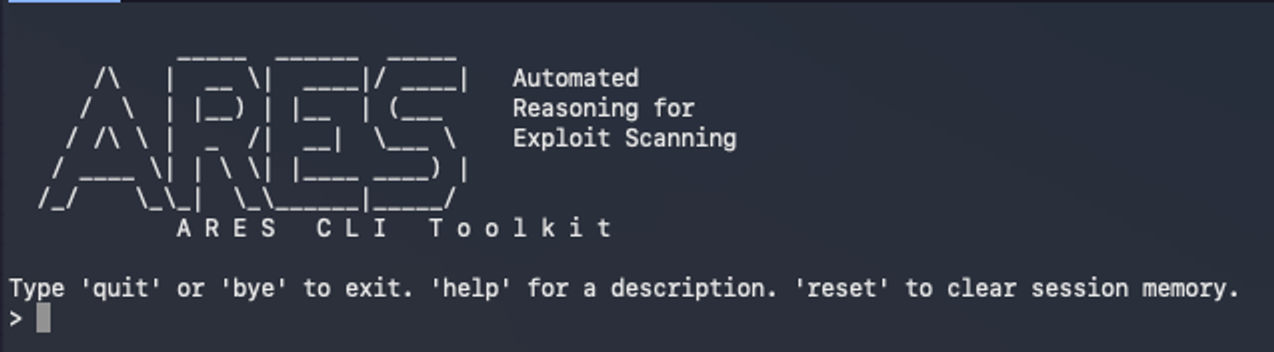
I did my master's thesis on AI cybersecurity at the Georgia Institute of Technology. My capstone thesis project was something I got to choose, and at the time AI was really starting to take off in some new ways. So I chose to attempt to create Automated Reasoning for Exploit Scanning, with the idea that it would do everything up to running an exploit.
This was at a time when orchestration, sub-agents, and skills were just becoming a thing. So I used a lot of Anthropic's bleeding-edge frontier research to come up with what, at the time, felt like a new concept: different system-prompted agents handing work back and forth.
- Why air-gapped?
The air-gapped part came from a big desire to make this as private as possible, possibly from my military background and partially out of paranoia about the world. One of the real-world situations I envisioned was running ARES on air-gapped LANs.
- What would you do differently now?
MCP servers were just getting started when I did this. I would definitely start with a structured way for agents to pass data back and forth, to help with the general flow. I would also take a time machine and invest in graphics cards or Mac Studios early, to run larger models and get further than what the small 8–16B models could do.